Rethinking Parking to Build Better Communities in BC
Great communities start with people—not parking lots. At Century Group, we believe good design means walkable streets, vibrant public spaces, and homes for people at every stage of life. That’s why we support a growing shift in BC to rethink outdated parking minimums.
Across cities like Vancouver and Surrey, rules that once required a set number of parking spots for every home or business are being reformed. These changes make room for more affordable, people-first communities.
How Parking Rules Shaped Our Cities
For decades, North American cities mandated fixed amounts of parking, often one or more spots per housing unit. While this ensured places to park, it also raised housing costs, encouraged car dependency, and spread out communities.
Research from groups like the Sightline Institute and Parking Reform Network shows that these rules lead to more pavement, less housing, and fewer transportation choices. In 2024, Vancouver eliminated parking minimums citywide, unlocking new housing options. Crucially, requirements for accessible, visitor, and loading spaces remain intact.
Notably, removing parking mandates did not remove requirements for accessible spots for the disabled, visitor parking, and loading spaces.
What Happens When We Change the Rules
1. Lower Housing Costs, More Possibilities
Building underground parking can cost up to $60,000 per stall. That cost is passed directly to homebuyers and renters, even if they don’t own a car. Eliminating or reducing parking minimums can reduce these hidden costs and make homes more affordable.
In cities like Surrey, where parking minimums for multifamily buildings near frequent transit have been eliminated, builders now have more freedom to offer housing that meets local needs. This can include smaller, more affordable units or buildings with shared amenities like car-sharing and e-bike parking.
At Century Group, we’ve seen firsthand how flexible parking requirements support a broader range of housing options. In our projects, from Southlands in Tsawwassen to 3 Civic Plaza in Surrey City Centre, we’ve integrated a mix of homes that serve families, young professionals, seniors, and everyone in between that offer residents a range of parking options.
2. More Walkable, Livable Communities
Parking mandates have been shown over time to have an unintended effect: they spread out buildings and services, making neighbourhoods and main streets less accessible and lively. When land is devoted to wide parking lots or multi-level garages, there’s less room for storefronts, cafés, green space, or homes. The result is often a fragmented cityscape where people rely on cars for even short errands.
Removing parking minimums gives city planners and builders the flexibility to create compact, pedestrian-friendly neighbourhoods. This reflects today’s best urban planning principles, prioritizing density, active transportation, vibrant public spaces and commercial areas.
Take our mixed-use projects at Century Group, for example. We design places where people can live, work, and play all within walking distance. This strengthens local businesses and reduces reliance on driving.
3. Better Transit Connections
Transit thrives in higher-density areas where more people live within walking distance of stops. Parking requirements dilute that density. We can build more efficient, sustainable, transit-oriented neighbourhoods by reforming these rules, especially near SkyTrain stations or frequent bus routes.
In Vancouver, parking mandates were scrapped citywide in 2024, and the results are promising. New developments offer unbundled parking (where residents can choose whether to pay for a space), more bike parking, and better access to transit, all of which give people more choices about how they get around.
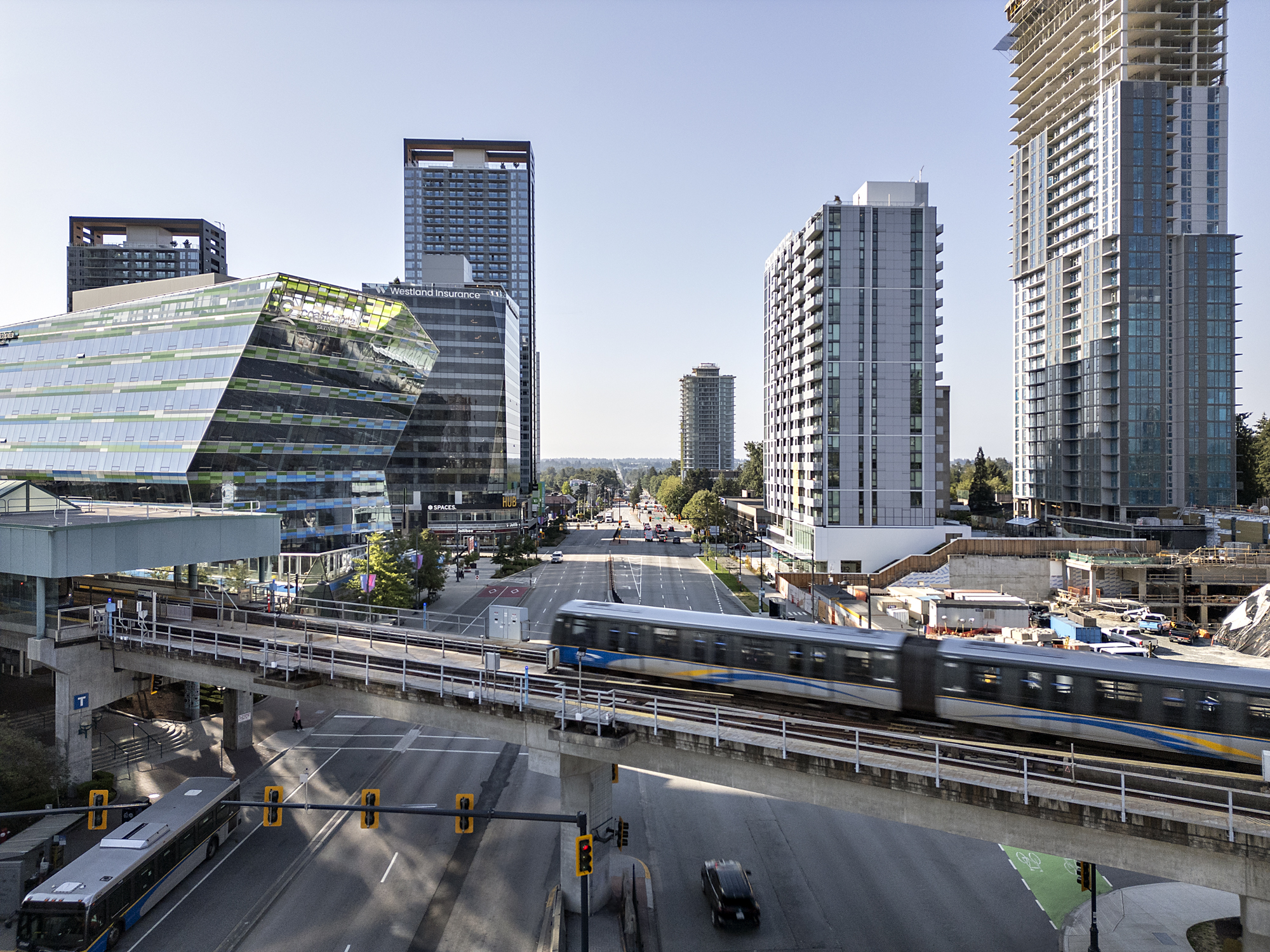
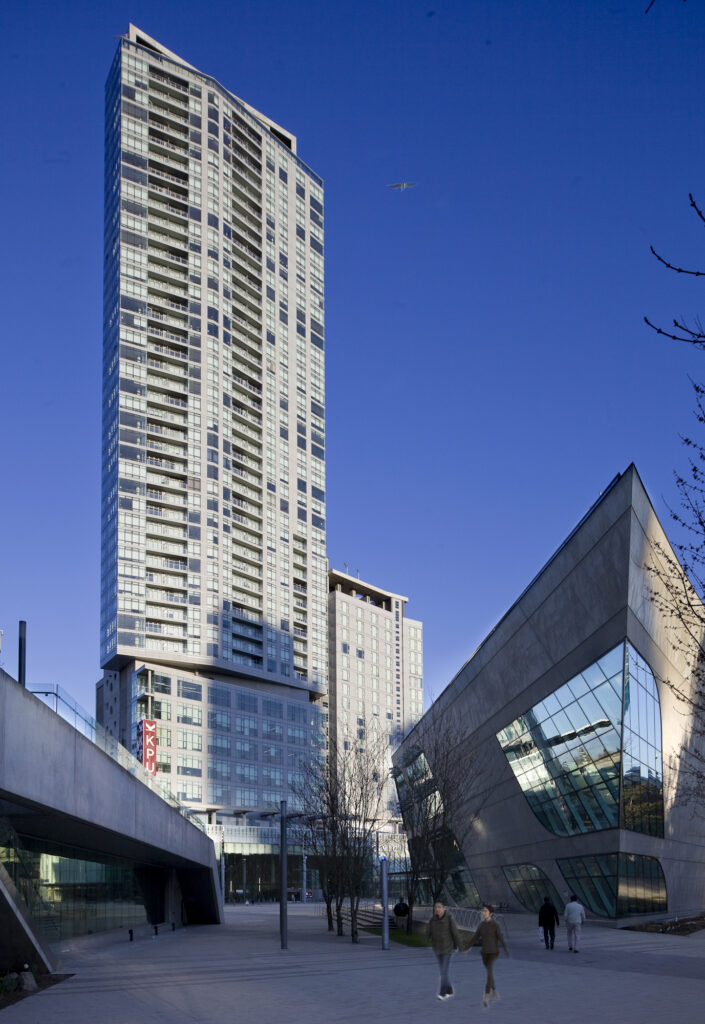
Our 3 Civic Plaza project places residents right next to a SkyTrain station, with integrated access to housing, retail, and public space. Parking reform helped make that possible.

4. Room for What Communities Really Need
Some residents want parking. Others want to save money and live car-free. Parking reform supports both. Instead of a one-size-fits-all approach, it lets the market determine what makes sense for each community.
With a growing interest in car-sharing, e-bikes, and ride-hailing plus self-driving technology on the horizon, the future of mobility is changing fast.
At Century Group, we believe in designing for choice. Our communities are built to support all kinds of lifestyles: walkable, transit-connected, and flexible. That means creating spaces for people, not just for cars.
A New Approach to Growth
Parking reform isn’t about removing parking, it’s about enabling a smarter use of space. It supports more housing, better transit, and greener neighbourhoods.
At Century Group, we’re proud to help lead this shift. Each of our communities prioritize:
- Walkability: Safe, inviting streetscapes encourage walking and bicycling.
- Transit Integration: SkyTrain, bus, car-share, and bike-friendly design.
- Mixed-Use Planning: Homes, shops, services, and jobs in one place.
- Community Spaces: Parks, plazas, and places to gather.
- Housing for All Life Stages: From starter homes to downsizing options and everything in between.
By moving beyond outdated parking rules, we are creating communities that work better today and tomorrow.
The Road Ahead
Cities like Vancouver and Surrey are showing how parking reform can unlock potential. They’re creating room for more housing, ensuring better transit, and building stronger neighbourhoods.
Century Group will continue to advocate for thoughtful, flexible policies that support affordability, sustainability, and vibrant neighbourhood life as we look ahead. The future of our communities depends on how bravely we rethink the space between the buildings.
More Stories Like This